

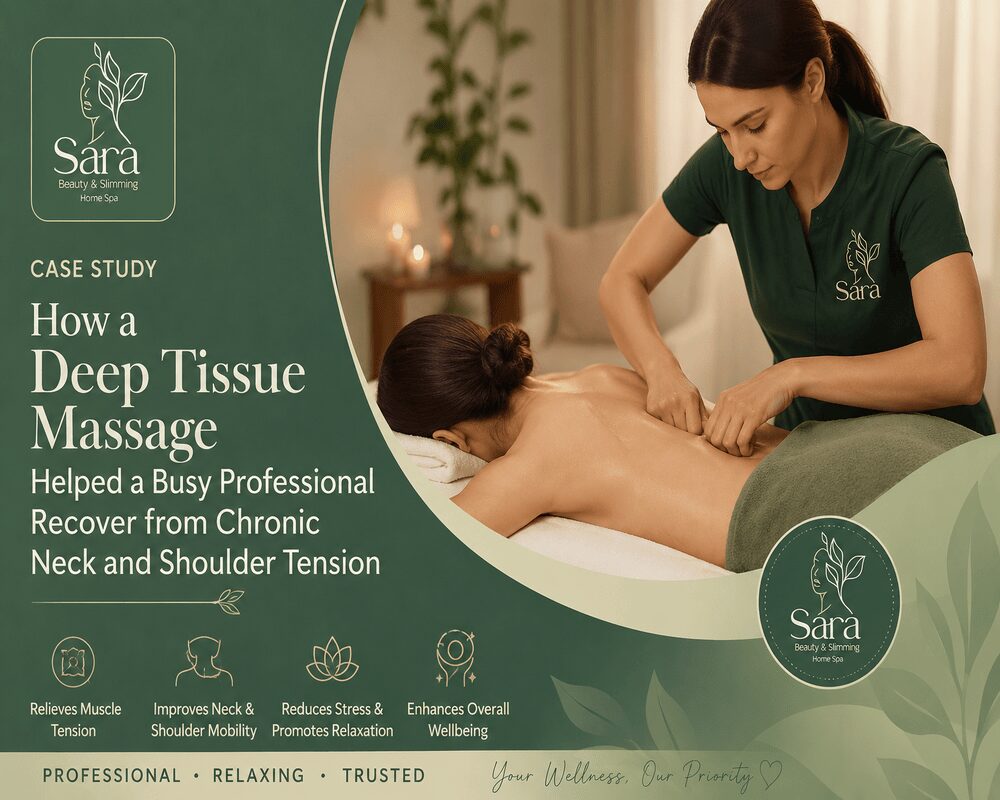
Deep Tissue Massage Case Study in Abu Dhabi: Client Background
Client Profile
For privacy reasons, the client’s name has been changed.
Client: “Aisha” (Name Changed)
Location: Abu Dhabi, UAE
Age Group: 30–40 years
Occupation: Office Professional
Aisha contacted Sara Beauty for a home massage in Abu Dhabi after experiencing persistent neck and shoulder pain for several months. Her work required long hours at a desk, frequent video meetings, and extended periods using a laptop. By the end of each day, she often felt stiffness across her upper back, tension headaches, and difficulty sleeping comfortably.
She wanted a professional female therapist who could provide a full body deep tissue massage in Abu Dhabi in the comfort and privacy of her home.
Initial Consultation and Assessment
Understanding the Client’s Pain Points
Before the appointment, our therapist conducted a brief consultation to understand:
- Areas of discomfort
- Medical history and recent injuries
- Pain intensity and daily routine
- Previous massage experience and preferred pressure level
Based on the discussion, a 90-minute Deep Tissue Massage was recommended, focusing heavily on the neck, shoulders, upper back, and lower back.
Deep Tissue Massage Treatment Plan
Techniques Used During the Session
During the session, the therapist used a combination of:
- Deep tissue massage techniques
- Slow muscle-release movements
- Trigger point therapy
- Gentle stretching and relaxation techniques
The pressure was adjusted throughout the session according to the client’s comfort level.
Immediate Results After Deep Tissue Massage
Client Feedback After the Session
At the end of the treatment, the client reported:
- Noticeably reduced tightness in the shoulders
- Easier neck movement
- A feeling of deep relaxation
- Less pressure across the upper back
She was also advised to stay hydrated, perform light stretching, and avoid prolonged sitting without breaks.
Follow-Up Results and Long-Term Improvement
Changes Reported After Several Days
A few days later, the client shared that:
- Morning stiffness had reduced significantly.
- Tension headaches were less frequent.
- Sleeping had become more comfortable.
- She felt more productive during work without constant shoulder discomfort.
To maintain these improvements, she decided to schedule regular sessions every three to four weeks.
Therapist’s Recommendation for Office Workers
Managing Muscle Tension Caused by Desk Jobs
For clients with desk-based jobs, regular massage therapy can help manage muscle tension caused by prolonged sitting. Combining massage with good posture, short movement breaks, and stretching can support overall comfort and wellbeing.
Why the Client Chose Sara Beauty
Benefits of Choosing Sara Beauty Home Spa
The client selected Sara Beauty because of:
- Professional female therapists
- Premium home service anywhere in Abu Dhabi
- Flexible appointment scheduling
- Clean, hygienic, and sanitized equipment
- Personalized treatment based on individual needs
Conclusion: Deep Tissue Massage Results in Abu Dhabi
Every client has unique needs, which is why each session at Sara Beauty begins with a consultation rather than a one-size-fits-all approach.
This case highlights how a personalized deep tissue massage helped one busy professional reduce muscular tension, improve mobility, and enjoy greater day-to-day comfort.
Frequently Asked Questions About Deep Tissue Massage
Is Deep Tissue Massage suitable for people with desk jobs?
Yes. Deep Tissue Massage is often recommended for people who spend long hours sitting at a desk. It can help relieve muscle tension in the neck, shoulders, and upper back caused by poor posture and repetitive work habits.
How long does it take to feel relief after a Deep Tissue Massage?
Many clients notice reduced muscle tightness and improved mobility immediately after the session. However, results vary depending on the individual’s condition, muscle tension, and lifestyle.
Why was a 90-minute massage recommended in this case study?
The therapist recommended a 90-minute session because the client had multiple areas of tension, including the neck, shoulders, upper back, and lower back. A longer session allowed enough time to treat each area thoroughly without rushing the treatment.
What should I do after a Deep Tissue Massage?
After the massage, it is generally recommended to drink plenty of water, perform light stretching, and avoid sitting for long periods without breaks. Following the therapist’s aftercare advice can help support muscle recovery.
How often should I book a Deep Tissue Massage for ongoing muscle tension?
The ideal frequency depends on your lifestyle and muscle condition. For people with recurring neck and shoulder tension from desk work, many therapists recommend a session every 3–4 weeks to help manage discomfort.
What is the typical deep tissue massage price or cost in Abu Dhabi?
The deep tissue massage cost in Abu Dhabi varies depending on the duration of the session and whether it is an in-spa or home service treatment. At Sara Beauty, we offer transparent pricing for our professional home spa services. Please check our official pricing page or contact us directly to get the latest deep tissue massage Abu Dhabi price and packages.
Is deep tissue massage covered by insurance in Abu Dhabi?
In Abu Dhabi (and across the UAE), standard wellness or relaxation massages are usually not covered by basic medical insurance. However, if the deep tissue massage is prescribed by a licensed physician as part of a medical physiotherapy or rehabilitation program, it might be eligible for partial or full coverage depending on your specific insurance provider and premium plan.
We recommend double-checking directly with your insurance provider to confirm your coverage details.
